Why Consistent UTM Medium Naming Matters More Than You Think

One of the most common reporting problems in Google Analytics 4 starts with a simple issue: Inconsistent UTM medium naming. Examples like: may all represent the same traffic source. But to GA4, they are completely different mediums. That creates messy reports, inaccurate channel grouping, and unreliable marketing analysis. Why Medium Matters The utm_medium parameter is […]

Why Consistent UTM Medium Naming Matters More Than You Think Read More »
Stop Using Spaces in UTM Parameters (Here’s Why It Matters)

The Problem: Spaces in UTM Parameters It might seem harmless to name your campaign like this: But under the hood, this creates a problem. When a URL contains spaces, browsers automatically convert them into encoded characters: That %20 is the encoded version of a space. Now imagine this happening across dozens—or hundreds—of campaigns. 👉 Your

Stop Using Spaces in UTM Parameters (Here’s Why It Matters) Read More »

Why You Need a UTM Naming Convention Document (and How to Create One)

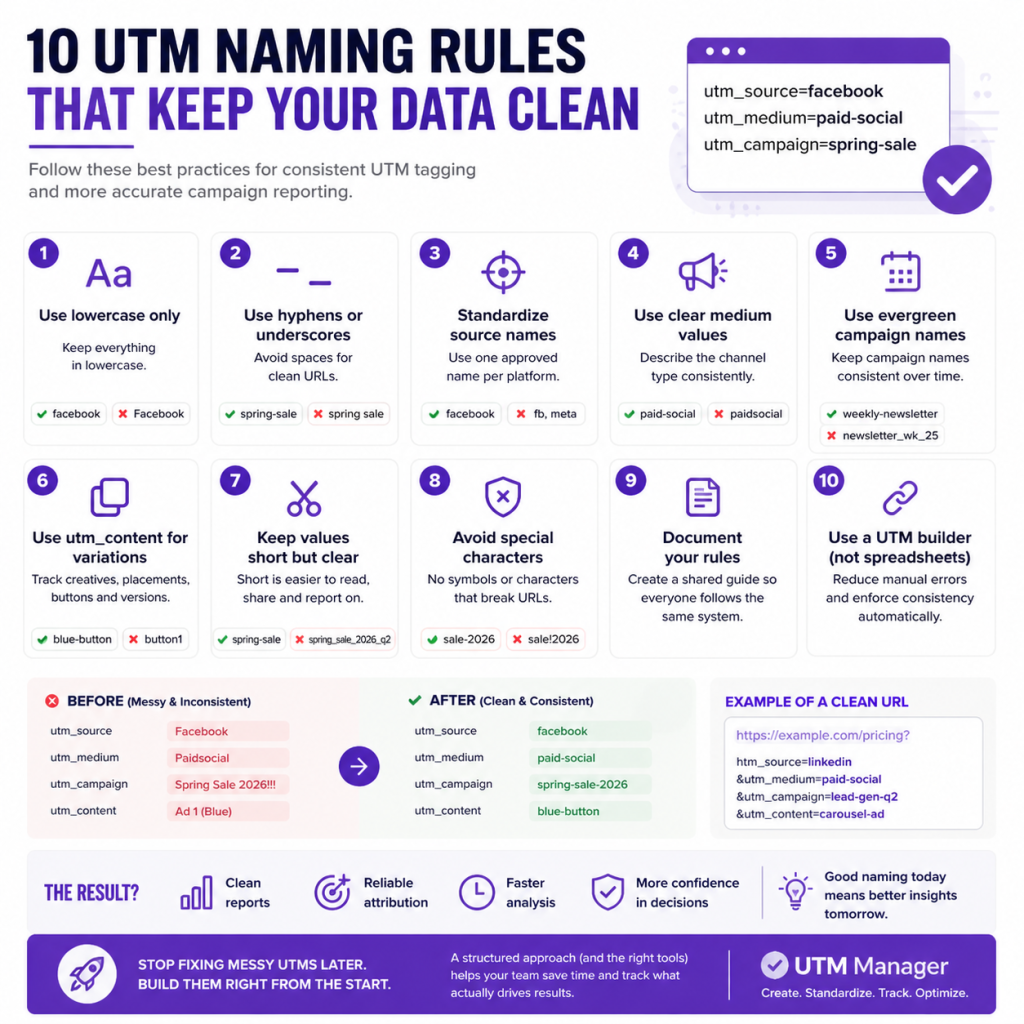
UTM tracking breaks down quickly without structure. One person uses facebook, another uses fb.One campaign is called spring_sale, another is spring2026. Now your reports are fragmented, inconsistent, and hard to trust. The fix isn’t more cleanup later—it’s standardization upfront. That’s where a UTM naming convention document comes in. What Is a UTM Naming Convention Document?

Why You Need a UTM Naming Convention Document (and How to Create One) Read More »

Don’t Use UTMs on Internal Links (Here’s Why It Breaks Your Data)

The Common Mistake: Using UTMs Internally UTM parameters are one of the most powerful tools in marketing analytics—but they’re also one of the most commonly misused. One of the biggest mistakes?Adding UTMs to links inside your own website. This includes: It might seem harmless—but it can quietly destroy your data. ⚠️ What Actually Happens Let’s

Don’t Use UTMs on Internal Links (Here’s Why It Breaks Your Data) Read More »

Why You Must Tag Every Owned Campaign (and How to Do It Right)

Most marketers obsess over paid campaign tracking—but overlook the traffic they fully control. Emails, PDFs, QR codes, and even internal promotions often go untagged. The result? A large chunk of your performance shows up as Direct traffic, giving you zero insight into what’s actually working. What Is “Owned Media” (and Why It Matters) Owned media

Why You Must Tag Every Owned Campaign (and How to Do It Right) Read More »

UTM Naming Best Practices: How to Keep Campaign Tracking Clean and Consistent

If your campaign reports feel messy, duplicated, or hard to trust, poor UTM naming is often the reason. One person uses facebook, another uses Facebook, someone else enters fb, and suddenly your reports are fragmented. Strong UTM naming conventions help marketing teams stay organized, improve attribution accuracy, and make reporting easier across platforms like Google

UTM Naming Best Practices: How to Keep Campaign Tracking Clean and Consistent Read More »

Which Three Campaign Parameters Are Recommended to Manually Track Campaigns?

If you want cleaner attribution reporting, better campaign comparisons, and fewer messy links, start with the three most important campaign tracking parameters: utm_source, utm_medium, and utm_campaign. These three parameters are the foundation of manual campaign tracking and are widely used with tools like Google Analytics and other analytics platforms. Whether you run email promotions, paid

Which Three Campaign Parameters Are Recommended to Manually Track Campaigns? Read More »

Standardize UTM Abbreviations: Stop Confusing Campaign Reports

Many marketing teams use abbreviations in UTM parameters to keep links short and manageable. That can be smart—until everyone starts making up their own versions. One person uses ig for Instagram. Another uses insta. Someone else uses instagram. Suddenly, your reports are split across multiple rows for the same traffic source. That is why it

Standardize UTM Abbreviations: Stop Confusing Campaign Reports Read More »

×
UTM URL Builder
You’re in guest mode — build, copy, and export are available. Sign in or create an account to save and load org rules & templates.